Skip to content
Annual Boiler Service Checklist

Ever wondered what your heating engineer is actually doing during that yearly boiler service? You pay £80-120, they’re there for about an hour, and then they hand you a certificate and leave. But what are they checking? And is it really worth the money?
Let me walk you through exactly what happens during a proper annual boiler service, the complete checklist that Gas Safe engineers follow to keep your heating safe, efficient, and working reliably all year round.
An annual boiler service is basically a health check for your heating system. Just like you’d get your car MOT’d or visit the dentist for a check-up, your boiler needs a once-over every year to make sure everything’s working safely and efficiently.
Need your boiler serviced? Our Gas Safe registered team is ready to help! Book your annual boiler service in Slough today.
Here’s why it matters:
- Safety first – Identifies potential carbon monoxide risks before they become dangerous
- Efficiency – A well-maintained boiler uses less gas and cuts your energy bills
- Longer lifespan – Regular servicing can add years to your boiler’s life
- Warranty protection – Most manufacturers require annual servicing or your warranty becomes invalid
- Fewer breakdowns – Catching small problems early prevents expensive emergency repairs
Important: Only a Gas Safe registered engineer can legally service your gas boiler. Always check their ID card before letting them work on your system.
What Homeowners Should Expect During a Professional Boiler Service
A proper boiler service typically takes 30 to 60 minutes, depending on your boiler’s age and condition. The engineer isn’t just giving it a quick look, they’re following a detailed checklist of checks, tests, and maintenance tasks.
What’s included in a standard service:
- Visual inspection of the boiler and surrounding area
- Opening the boiler and checking internal components
- Cleaning key parts
- Safety testing (gas leaks, carbon monoxide, combustion)
- Operational checks
- Written service report
What’s usually NOT included:
- Repairs (these cost extra if needed)
- Power flushing your heating system
- Radiator bleeding
- Replacing worn parts
- Fixing existing faults
Think of it like this: a service is about prevention and checking. If something needs fixing, that’s a separate job with separate costs.
At ZR Heatings, we perform thorough, professional boiler servicing that covers every necessary check on this list, without exception.
Pre-Service Safety Checks
Before your engineer even touches the boiler, there are some essential safety steps.
Checking credentials: A legitimate engineer will happily show you their Gas Safe ID card. It should have a photo, registration number, and expiry date. You can verify it’s genuine on the Gas Safe Register website.
Assessing the area: They’ll check the space around your boiler has proper ventilation. Boilers need air to burn gas safely. If your boiler’s in a cupboard stuffed with towels and cleaning products, they’ll ask you to clear the space.
Quick visual scan: Before opening anything, they’re looking for obvious problems, water pooling underneath, visible corrosion, strange smells, or soot marks that might indicate combustion issues.
Visual Inspection of Boiler and Surrounding Area
With the boiler cover still on, your engineer checks the external condition.
What they’re looking for:
Check | Why It Matters |
Corrosion or rust spots | Can indicate leaks or poor ventilation |
Soot marks around the case | Suggests incomplete combustion (dangerous) |
Water stains or damp | Points to leaks that need urgent attention |
Flue condition | Must be secure, properly positioned, undamaged |
Pipework condition | Checking for leaks, corrosion, poor joints |
Seals around casing | Ensures no gas can escape |
The flue is particularly important, it’s the pipe that takes dangerous exhaust gases outside. If it’s damaged, blocked, or incorrectly positioned, carbon monoxide could enter your home.
Internal Boiler Component Inspection
Now comes the detailed bit. Your engineer removes the boiler casing and systematically checks every major component inside.
Heat Exchanger
This is the heart of your boiler where water gets heated. Engineers check for:
- Cracks (even tiny ones can be dangerous)
- Limescale buildup (common in hard water areas like Slough)
- Blockages that restrict water flow
- Corrosion that might cause future leaks
Burner & Ignition System
The burner is where gas ignites to create heat. A dirty or faulty burner wastes energy and creates safety risks. Engineers check:
- The burner is clean and debris-free
- Ignition happens smoothly
- The flame is the right color (should be crisp and blue, not yellow or orange)
- Gas flows properly
Electrodes
These create the spark that lights your boiler. Over time, they get dirty or corroded. Your engineer will clean them or recommend replacement if they’re worn out.
Seals and Gaskets
Rubber seals prevent gas and water leaking. They perish over time, especially in older boilers. Replacing worn seals during a service prevents leaks developing later.
Wiring and Electrical Connections
Loose wires can cause intermittent faults or complete breakdowns. Engineers check all connections are secure and look for any signs of burning or damage.
Fans and Ventilation Components
The fan removes exhaust gases from your boiler. If it fails, dangerous gases can’t escape. Engineers test:
- Fan spins freely
- Correct speed
- No unusual noises
- Proper airflow through the boiler
Cleaning and Maintenance Tasks
A service isn’t just about checking there’s hands-on maintenance too.
Cleaning the burner: Even in a well-maintained boiler, burners collect dust and debris. Your engineer will carefully clean the burner to ensure efficient combustion.
Condensate trap: Modern condensing boilers produce acidic water that drains away through a condensate pipe. The trap can collect sludge and debris. Cleaning it prevents blockages that would lock out your boiler.
Magnetic filter: If your system has one fitted, the engineer will clean it out. These filters catch metal particles and sludge, stopping them from damaging your boiler.
Internal filters: Many boilers have filters inside that trap debris. These get cleaned or replaced during the service.
Operational Checks
Once everything’s clean and checked, your engineer fires up the boiler and watches how it performs.
What they’re testing:
Startup sequence: Does the boiler go through its ignition process correctly? Any unusual delays or sounds?
Boiler pressure: Should be between 1 and 1.5 bar when cold. Too low and the boiler won’t work; too high and the pressure relief valve might activate.
Flow rate: Is water circulating properly through the system?
Thermostat response: When you adjust the temperature, does the boiler respond correctly?
Flame quality: Once lit, the flame should be steady, blue, and evenly distributed across the burner.
Safety Tests (The Most Critical Section)
This is the part you’re really paying for, the safety checks that protect your family.
Carbon Monoxide Test
Using specialized equipment, engineers test for carbon monoxide around the boiler and in the room. Even tiny amounts are dangerous. This test literally saves lives by detecting carbon monoxide risks before they become dangerous.
Gas Leak Test
Every gas connection is checked for leaks using electronic detectors or leak-detection fluid. Even the smallest gas leak is a serious hazard.
Ventilation Test
The room needs enough fresh air for safe combustion. Engineers measure ventilation levels and check that vents aren’t blocked.
Flue Gas Analysis
This is the technical bit. Using a flue gas analyser, engineers measure:
- Carbon monoxide levels in exhaust gases
- Carbon dioxide levels
- Oxygen levels
- Temperature
These readings show whether combustion is happening efficiently and safely. Poor readings indicate problems that need fixing immediately.
Safety Lockout Test
Your boiler should shut itself down if something goes wrong. Engineers test that safety systems work properly.
System-Wide Heating Checks
While servicing the boiler, good engineers also check your wider heating system.
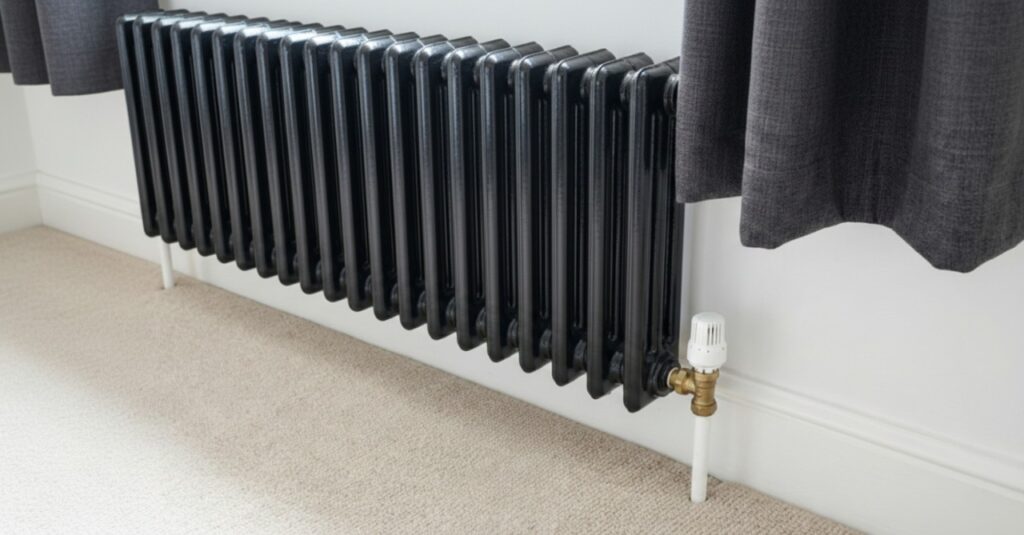
Radiator performance: Are all radiators heating evenly? Cold spots might indicate air or sludge in the system.
Pump operation: The pump circulates hot water around your home. Engineers check it’s running smoothly without unusual noises.
Circulation issues: If radiators are slow to heat or some rooms stay cold, there might be sludge blocking pipes. Engineers might recommend a power flush to clear the system.
Boiler Pressure and Expansion Vessel Check
Pressure levels: Your boiler needs to maintain the right pressure to work efficiently. Too low and it won’t fire up; too high and safety valves activate.
Expansion vessel: This hidden component handles pressure changes as water heats and cools. Engineers check the air charge is correct a faulty expansion vessel causes constant pressure drops.
Safety valves: The pressure relief valve prevents dangerous pressure buildup. Engineers test it opens and closes properly.
Condensate System Inspection
Modern boilers produce condensate (acidic water) that drains outside. Problems with this system are a major cause of winter breakdowns.
What engineers check:
- Condensate pipe isn’t blocked
- Pipe has proper fall (slope) for drainage
- External sections are insulated (prevents freezing)
- Trap is clean and working
- Drainage is flowing freely
In areas like Slough, where we get cold winters, proper condensate pipe insulation prevents those frustrating frozen pipe lockouts.
Verification of Controls & Smart Thermostats
If you’ve got a smart thermostat like Nest, Hive, or Honeywell, engineers check it’s communicating properly with your boiler.
Testing includes:
- Wiring connections are secure
- Thermostat responds to temperature changes
- Smart features work correctly
- Settings are optimized for efficiency
Service Report and Documentation
After completing all checks, a professional engineer provides a detailed service report.
A proper report should include:
✓ Combustion readings with actual numbers
✓ Safety test results
✓ List of any faults found and fixed
✓ Recommendations for future work
✓ Overall condition rating of your boiler
✓ Engineer’s signature and Gas Safe number
✓ Date of service (important for warranty)
Keep this report safe you’ll need it for warranty claims, when selling your house, or if you need repairs later.
Common Issues Engineers Find During Annual Services
Here’s what regularly crops up during servicing:
Low boiler pressure – Usually due to small leaks or air in the system
Dirty burners – Reduces efficiency and can cause lockouts
Leaking seals – Catch early before they cause water damage
Faulty sensors – Can cause erratic behavior or error codes
Blocked condensate trap – Major cause of winter breakdowns
Flue issues – Dangerous if not caught early
Poor combustion – Wastes money and creates safety risks
The beauty of annual servicing? All these get caught and fixed before they leave you without heating in January. Engineers often find issues causing error codes. Our guide on understanding boiler error codes helps you recognize problems between services.
How Often Should a Boiler Be Serviced?
The standard answer: Every 12 months.
For landlords: Annual servicing is a legal requirement. You must provide tenants with a valid gas safety certificate every year. The legal requirements for gas safety are enforced by the Health and Safety Executive.
For homeowners: While not legally required, skipping services can:
- Void your boiler warranty
- Reduce efficiency (costing you more in energy bills)
- Miss developing safety issues
- Lead to expensive breakdowns
Think of the £80-120 annual service cost as insurance against a £500+ emergency repair bill.
Cost of an Annual Boiler Service (UK Overview)
Typical costs in 2025: £80 – £120 for a standard service
What affects the price:
- Your location (London and South East typically cost more)
- Boiler age (older boilers take longer)
- Boiler type (system and regular boilers cost slightly more than combis)
- Additional work needed (repairs are extra)
- Service plan or one-off (annual plans often work out cheaper)
Final Checklist Homeowners Can Use
When your engineer finishes, they should have completed all of these:
Visual Inspection
- External condition checked
- Flue inspected
- Pipework examined
- Area around boiler assessed
Internal Inspection
- Heat exchanger checked
- Burner examined
- All seals inspected
- Electrical connections checked
- Fan tested
Cleaning
- Burner cleaned
- Condensate trap cleared
- Filters cleaned/replaced
- Magnetic filter serviced (if fitted)
Safety Tests
- Carbon monoxide test
- Gas leak test
- Flue gas analysis
- Ventilation check
- Safety devices tested
Operational Tests
- Startup sequence observed
- Pressure checked
- Controls tested
- Flame quality verified
Documentation
- Service report provided
- Any faults explained
- Recommendations given
- Certificate signed
When to Call an Engineer Before Your Annual Service
Don’t wait for your annual service if you notice:
Immediate concerns:
- Smell of gas (turn off and call immediately)
- Yellow or orange flames (should be blue)
- Soot or black marks around the boiler
- Carbon monoxide alarm goes off
Book a check soon:
- Strange noises (banging, whistling, gurgling)
- Boiler pressure constantly dropping
- Error codes appearing
- Radiators not heating properly
- Boiler keeps locking out
- Hot water is inconsistent
Learn what common boiler codes mean and which ones need immediate attention.
Final Thoughts
An annual boiler service might seem like just another expense, but it’s genuinely one of the smartest things you can do for your home.
For £80-120, you get:
- Peace of mind that your family is safe from carbon monoxide
- Better efficiency (often saving more than the service costs)
- Fewer breakdowns and emergency callouts
- A boiler that lasts longer
- Your warranty stays valid
Always use a Gas Safe registered engineer. It’s the law, and it’s for your safety. A cheap service from an unqualified person isn’t a bargain; it’s a risk.
Treat your annual service like preventative medicine for your heating system. Catching small problems early is always cheaper and safer than dealing with emergency breakdowns in the middle of winter.
Need your boiler serviced? Make sure you choose qualified, experienced engineers who follow this complete checklist, not cowboys who just give it a quick glance and hand you a meaningless certificate.
Stay warm, stay safe, and keep that annual service booked!

how to bleed radiators correctly
Radiators Not Heating Properly